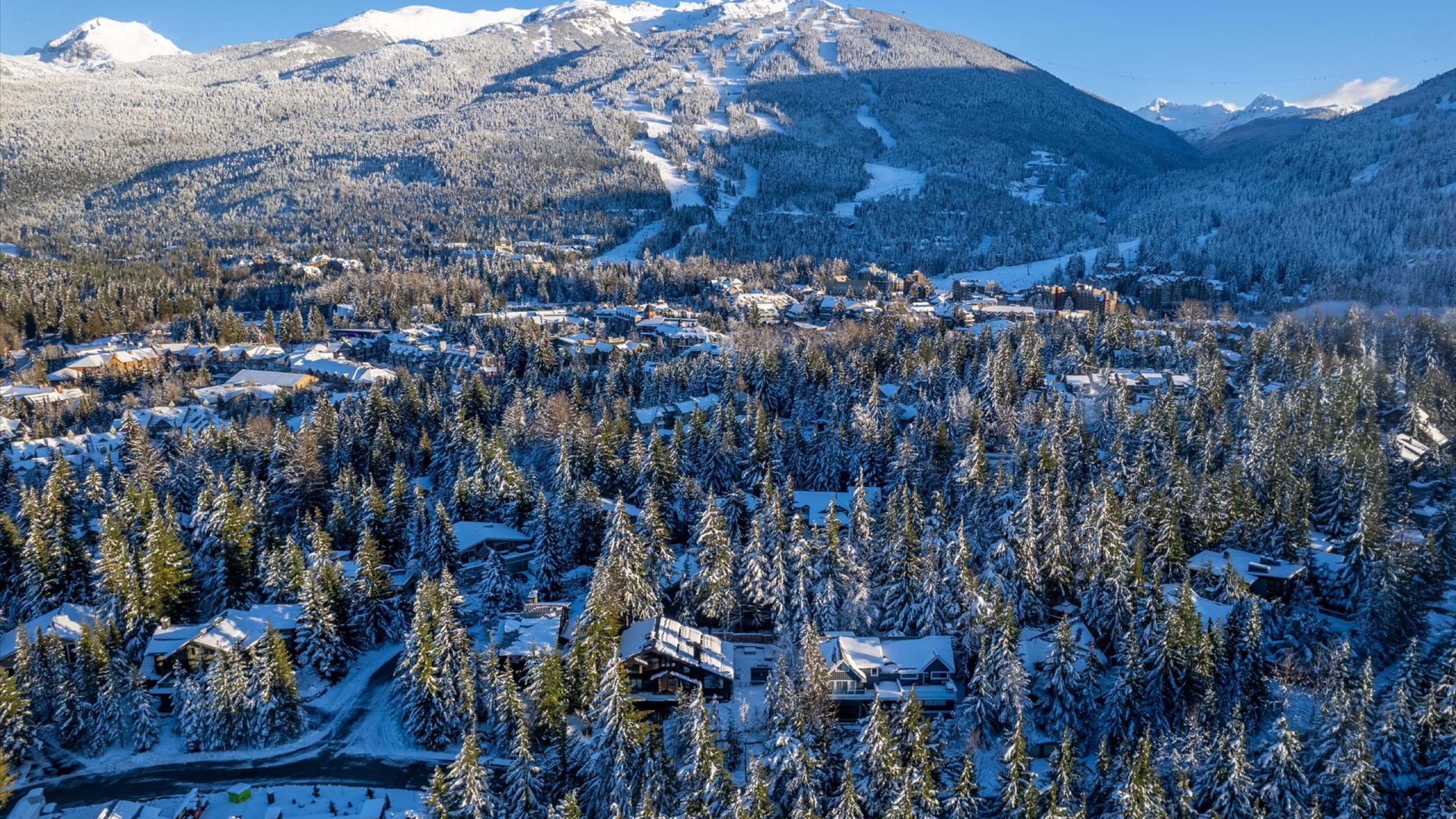
Ask almost anyone overseas about buying property in Canada and you'll hear the same thing: "foreigners can't buy there anymore." For Whistler, that's simply not the whole story — and the buyers who know the difference are quietly acquiring in one of the world's great resort markets while their competition assumes the door is closed. Here's how it actually works, from the rules to the wire transfer.
The Headline: Whistler Is Open
Canada's federal prohibition on residential purchases by non-Canadians is real — currently extended to January 1, 2027. But it applies to homes in census metropolitan areas and census agglomerations — the big-city regions. Whistler sits outside them.
In general terms: a buyer from London, Singapore, Sydney or Seattle who cannot buy a Vancouver condo can still buy in Whistler. Recreational and resort property outside the census areas is exactly the carve-out this market lives in.
Two honest footnotes:
- Squamish is different — it falls inside a census agglomeration, so the federal ban generally applies there. If your search spans the corridor, this line on the map matters.
- Rules get amended. We confirm the current state of play — with your lawyer, on your specific situation — before you commit to anything. That's standard practice on every international file I handle.
→ The prohibition, officially — CMHC
More good news stacked on top:
- BC's 20% foreign-buyer tax does not apply in Whistler. That surcharge covers specified regions — Metro Vancouver, the Fraser Valley, the Capital Region and others — and the Whistler area isn't one of them (verify current boundaries at purchase, as always).
- Whistler is exempt from BC's Speculation and Vacancy Tax — the annual tax that catches vacant second homes in the province's urban centres doesn't reach this valley.
For a global buyer comparing resort markets, that combination — purchase permitted, no foreign surcharge, no speculation tax — is genuinely rare in 2026 Canada. It's the quiet structural advantage of buying here.
Financing From Abroad
Canadian lenders finance non-resident purchases every week — on adjusted terms:
- Down payment: plan around 35%. Most Canadian banks want non-resident buyers at roughly one-third down; some programs go lower for buyers with Canadian ties or income.
- Documentation from home: income verification, bank references, and source-of-funds paperwork from your home country — often more of it than you'd need locally. Start assembling early.
- A Canadian bank account smooths everything: deposits, mortgage payments, strata fees, rental income. The major banks can typically open non-resident accounts, sometimes before you arrive.
- Rates and terms are usually close to resident pricing — the difference is the down payment and paperwork, not punitive interest.
- Cash purchases are common in this market and simplify the file considerably — though the source-of-funds and anti-money-laundering documentation still applies to everyone.
One Whistler-specific wrinkle worth knowing early: some covenanted properties (particularly Phase 2 hotel-condos) are hard to finance for anyone, resident or not. If your shortlist includes them, we plan the financing conversation around it from day one. I'll introduce you to brokers who work non-resident files regularly.
The Taxes, Honestly Mapped
Nobody loves this section, but international ownership done well is mostly about knowing these five moments. Ballparks — your cross-border accountant turns them into your numbers:
1. When you buy — Property Transfer Tax applies to everyone (roughly 1–3%+ of price, tiered). GST (5%) applies on new builds and many nightly-rental properties — sometimes deferrable if the property stays in rental use and you register. → PTT — gov.bc.ca
2. Every year you own — the federal Underused Housing Tax (1% annually) targets under-used foreign-owned homes, but vacation properties in eligible resort areas commonly qualify for exemptions — Whistler ownership is often shielded when the property is genuinely used or rented. Filing may still be required even when no tax is owed — this is the classic trap. → UHT — CRA
3. If you earn rental income — Canada withholds tax on rents paid to non-residents (the default is a flat percentage of gross rent; an election to be taxed on net income usually works out far better). A property manager or the tenant handles remittance — set this up properly from the first booking. → Non-resident rental income — CRA
4. When you sell — non-resident sellers need a clearance certificate from the CRA, and until it arrives the buyer's lawyer holds back a substantial portion of the price (typically around a quarter). It's routine, but it takes lead time — we build it into the closing schedule, never discover it there.
5. At home — your own country may tax the same income or gains, usually with credits under a tax treaty. This is precisely why the accountant on your team should speak both tax systems.
The theme: none of this is prohibitive — Whistler has had international owners since the lifts first spun. It's simply paperwork that rewards being done in the right order.
Buying Without Being Here
Most of my international files close without the buyer setting foot in the valley between offer and keys:
- Video-first viewings. I walk properties live on video, and I tell you what the camera can't — the road noise, the afternoon shade, the neighbour's woodpile. The same honesty you'd get standing beside me.
- Remote signing. Offers and most documents sign electronically; the land-transfer documents that need more can be handled through a notary or Canadian embassy/consulate where you are, or by power of attorney arranged with your Canadian lawyer.
- Time zones are a feature. Offers here often move in the evening Pacific time — morning in Europe, afternoon in Asia. International clients are frequently easier to reach at the moments that matter.
- Your Canadian team does the ground game: lawyer (title, funds, closing), accountant (structure and filings), broker (financing), me (everything with a doorknob). I assemble these introductions routinely.
- After closing, a property manager — or a Phase 2 hotel program — means the property runs without you. Through my own vacation-rental servicing business I know exactly which managers actually answer their phones in February.
Which Whistler Property Suits an Overseas Owner?
The covenant system (Whistler's famous Phase 1 / Phase 2 distinction) matters double when you live eleven time zones away:
- Phase 2 hotel-condos are the classic international play: your stays guaranteed, the hotel runs everything, revenue offsets costs, and there's nothing to manage from abroad. Financing is the constraint — many are cash purchases.
- Phase 1 with professional management earns more and appreciates in the deeper market — at the cost of being a real (managed) business you own from afar.
- Residential-zoned homes suit buyers planning extended stays or an eventual move — pair them with a caretaking arrangement for the empty months (insurance policies here have opinions about vacant homes in winter).
(The full breakdown lives in our Phase 1 vs. Phase 2 guide — read it before you shortlist anything in the Village.)
And why Whistler at all? You likely know, or you wouldn't be reading — but for the file you'll send your advisor: North America's largest ski resort, a genuine dual-season destination (summer visitation now rivals winter), 2010 Olympic infrastructure, two hours from a major international airport, and a constrained supply of buildable land in a valley that cannot sprawl. Global demand meets a fixed shoreline.
Keep Learning — Where to Go Deeper
From our guide library (all available at alliraking.ca — or ask me for a copy):
- Phase 1 vs. Phase 2 — essential pre-shortlist reading for any covenant property.
- The Whistler Buyer & Seller Guide — the full purchase process: offers, subjects, deposits, completion.
- The Whistler Real Estate Handbook — the friendly overview, glossary and neighbourhood tour.
- (The First-Time Buyer's Guide is for Canadian residents' programs — they don't apply to non-resident buyers, and nothing in it is needed here.)
Official sources worth bookmarking:
- Federal prohibition rules & exceptions — CMHC
- BC additional PTT (foreign buyer) regions — gov.bc.ca
- Underused Housing Tax — CRA
- Non-resident tax basics — CRA international
- Whistler municipal information — whistler.ca
Start the Conversation From Anywhere
Tell me your time zone and what you're imagining — a ski base, an income property, a future landing spot — and we'll take it from there. First call is a video walk-through of how the process works for your country and situation, no pressure and no obligation.
Allira King · Angell Hasman & Associates Realty Ltd. 604 902 6070 · allira@alliraking.ca · alliraking.ca · @alliraking
This guide is general information only — not legal, tax, immigration, lending or investment advice. Non-resident rules change frequently and consequences are significant; always confirm current requirements with a Canadian lawyer and a cross-border accountant before acting. Figures are 2026 approximations.