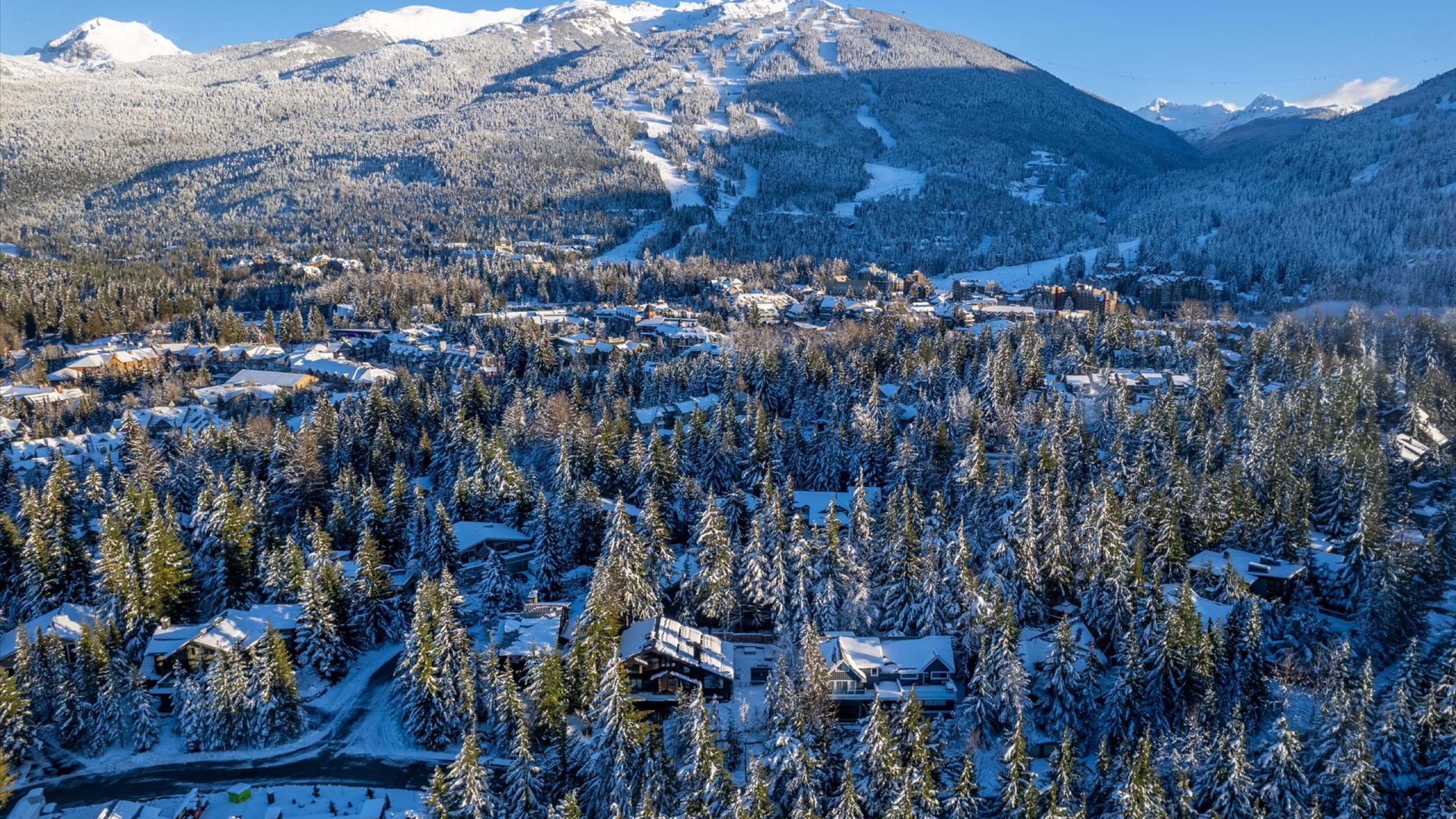
Buying your first home is exciting and slightly terrifying in roughly equal measure — and doing it in a resort market raises questions most guides never answer. Here's the honest version: what being a first-time buyer in Canada is actually worth, how down payments really work, and what's realistic in this valley. Ballpark numbers throughout — the official links have the fine print, and the rules do change.
Part One — Being a first-time buyer in Canada is worth real money
Canada quietly gives first-time buyers a stack of genuine advantages. Used together, they can be worth tens of thousands of dollars. Here's the toolkit:
1. The FHSA — the best first-buyer account in the country
The First Home Savings Account lets you contribute up to $8,000/year (to a $40,000 lifetime max). Contributions are tax-deductible like an RRSP, and withdrawals for a first home are tax-free like a TFSA — the only account in Canada that's deductible going in and tax-free coming out. If a first home is even on your five-year horizon, open one now to start the contribution room clock. → FHSA — Government of Canada
2. The RRSP Home Buyers' Plan
Withdraw up to $60,000 from your RRSP (each — so up to $120,000 per couple) tax-free toward a first home, repayable over 15 years. Stacks with the FHSA. → Home Buyers' Plan — Government of Canada
3. BC's Property Transfer Tax exemption
BC normally charges Property Transfer Tax on every purchase (roughly 1–3%). First-time buyers get a full or partial exemption — as of recent rules, full relief on a meaningful chunk of homes priced up to roughly the mid-$800,000s, with partial relief just above. On qualifying purchases this alone can save you up to ~$8,000. → First Time Home Buyers' Program — Gov of BC
4. The federal Home Buyers' Tax Credit
A $10,000 non-refundable credit on your first return after buying — worth about $1,500 back. → Home Buyers' Amount — CRA
5. New-build GST relief
Buying new construction? First-time buyers may qualify for GST relief on new homes (recent federal changes target new builds up to around the $1M mark, phasing out above), on top of the long-standing new-housing rebate. → GST/HST new housing rebates — Government of Canada
6. Longer amortizations
First-time buyers can access 30-year amortizations on insured mortgages (vs. the standard 25), which lowers the monthly payment — you pay more interest over time, but it can be the difference between qualifying and not.
The stacking effect: FHSA + HBP + PTT exemption + tax credit, on one purchase. A couple who both qualify, both with full FHSAs and healthy RRSPs, can bring well over $200,000 of tax-advantaged money to the table. This is why the paperwork is worth it.
Part Two — Down payments, demystified
The rules (2026 ballparks):
| Purchase price | Minimum down payment |
|---|---|
| Up to $500,000 | 5% |
| $500,000 – $1.5M | 5% of first $500k + 10% of the rest |
| Over $1.5M | 20% |
Worked example — a $700,000 Whistler condo:
- Minimum down: $25,000 (5% of $500k) + $20,000 (10% of $200k) = $45,000
- Under 20% down, you add mortgage default insurance (CMHC/Sagen/Canada Guaranty) — a one-time premium, roughly 3–4% of the loan, usually rolled into the mortgage. → CMHC — mortgage loan insurance
Whistler wrinkle, honestly: insured (low-down-payment) mortgages are for homes you'll occupy, priced under $1.5M — which fits plenty of Creekside, Village-adjacent and Squamish first homes. Nightly-rental investment condos and some covenanted properties play by different financing rules (often 20%+ down, sometimes specialty lenders). This is exactly the conversation to have before falling in love with a listing — I'll connect you with a broker who knows which buildings finance cleanly.
Also budget for closing costs — legal fees, inspection, appraisal, adjustments: plan on roughly 1.5–2.5% of the price on top of your down payment.
Part Three — International buyers: yes, Whistler is (mostly) open
The rule that surprises everyone: Canada's federal prohibition on residential purchases by non-Canadians (currently extended to January 1, 2027) applies in metropolitan census areas — and Whistler sits outside them. In general, international buyers can still purchase in Whistler when they can't in Vancouver. Squamish, being inside a census agglomeration, is treated differently — one more reason the right local advice matters. → Prohibition on the Purchase of Residential Property by Non-Canadians — CMHC
What international buyers should plan for:
- Larger down payments — Canadian lenders typically want around 35% from non-resident buyers, with income documentation from home.
- BC's foreign-buyer PTT surcharge does not apply in Whistler — it covers specified regions (Metro Vancouver, Fraser Valley and others) that don't include us. Verify current boundaries at purchase time.
- Federal Underused Housing Tax — an annual 1% tax on some foreign-owned residential property; vacation properties in eligible resort areas often qualify for exemptions, but this needs a cross-border accountant's eyes on your specific situation. → UHT — CRA
- A Canadian team: lawyer, accountant with cross-border experience, and a local realtor. I work with international buyers regularly and can assemble the introductions.
(To be clear: the first-time-buyer programs in Part One are for Canadian residents — international buyers don't get the FHSA, but they do get access to a market their home country's buyers often assume is closed.)
Part Four — What "first home in the Sea to Sky" realistically looks like
The honest local picture: entry points here are condos and townhomes — Creekside, Village North, Function Junction, and increasingly Squamish, where first-home budgets stretch further (keeping in mind the international-buyer difference above). Some Whistler properties also carry rental covenants that affect financing and use — a first home needs residential use, so we filter those early.
And one genuine first-buyer advantage unique to a resort town: a first home with a legal suite or flexible zoning can earn meaningful income toward its own mortgage. That math is very Whistler — and it's exactly the kind of math I love running with first-time buyers.
Rough starting points (2026, always moving): Whistler entry condos from the mid-$500s; Whistler townhomes typically $900k+; Squamish condos from the high-$400s. Treat these as orientation, not gospel — I'll give you live numbers when we talk.
Keep Learning — Where to Go Deeper
This guide focuses on the money side of a first purchase. For the topics we've only touched:
From our guide library (all available at alliraking.ca — or ask me for a copy):
- The full buying process — offers, subjects, deposits, completion day — is walked through step-by-step in The Whistler Buyer & Seller Guide and, in its friendliest form, The Whistler Real Estate Handbook (which also has a no-jargon glossary and a neighbourhood tour).
- Rental covenants — if a listing mentions Phase 1 or Phase 2, read our Phase 1 vs. Phase 2 Guide before falling in love. It changes what the property is worth to you.
- Buying from outside Canada? Part Three above is the short version — The International Buyer's Guide to Whistler covers financing from abroad, the tax moments, and buying without being here.
Official sources worth bookmarking:
- All first-time buyer programs in one place — Canada.ca: Buying a home
- FHSA, HBP and tax credits — linked throughout Part One above
- BC PTT first-time buyer exemption — gov.bc.ca
- Mortgage insurance and affordability tools — CMHC
- Rules for non-Canadian buyers — CMHC: the prohibition
Your first-home game plan
- Open an FHSA (even with $500) — start the clock.
- Talk to a broker — get the real pre-approval number. I'll introduce you.
- Pick your lane — Whistler condo, Squamish stretch, suite-income strategy.
- Let's look — no pressure, and I'll tell you when not to buy something.
Allira King · Angell Hasman & Associates Realty Ltd. 604 902 6070 · allira@alliraking.ca · alliraking.ca · @alliraking
This guide is general information, not financial, legal or tax advice. Program rules and thresholds are 2026 approximations and change regularly — confirm current details at the official links above and with your own advisors before making decisions.