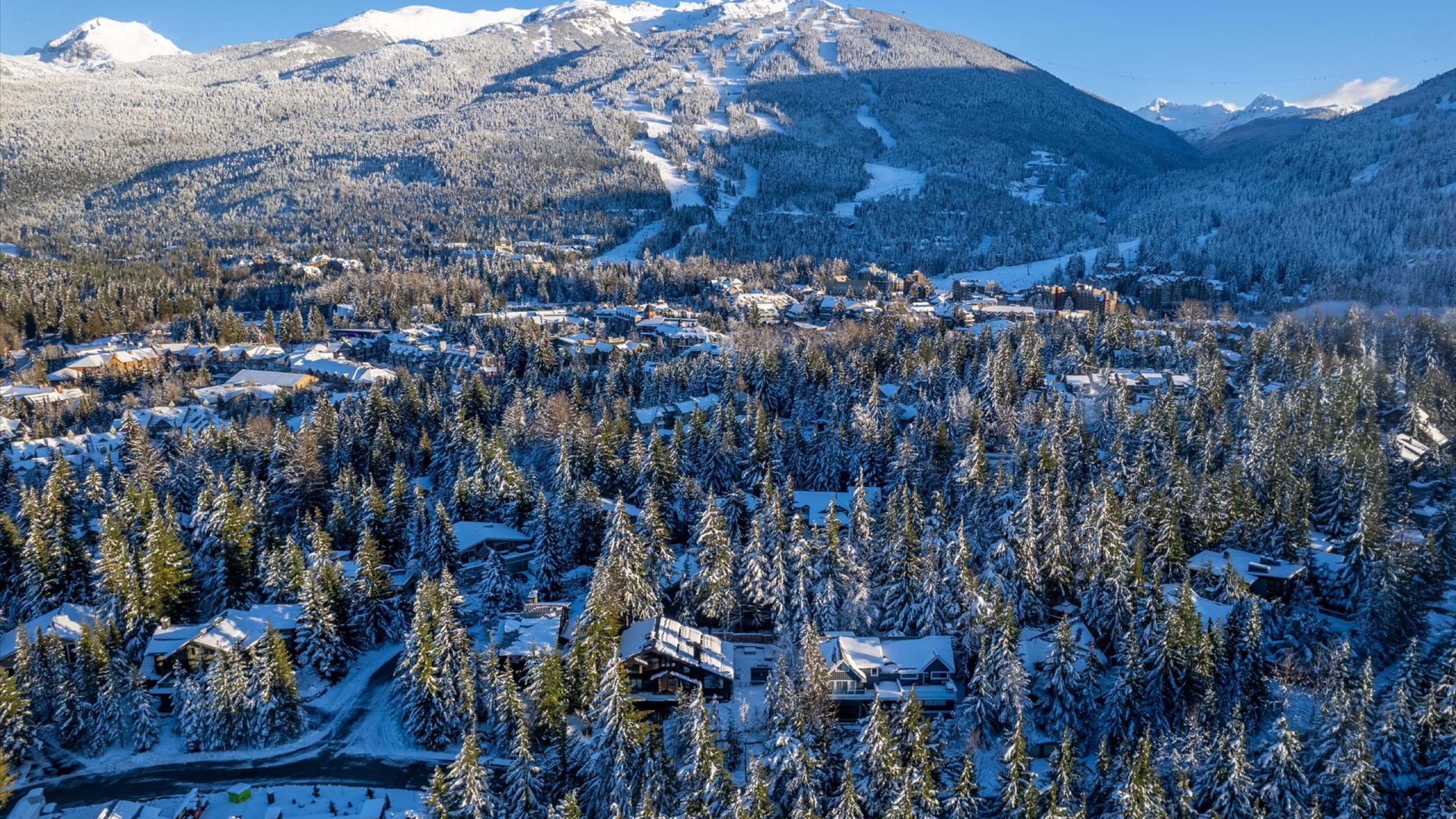
Buying or selling property is one of the biggest financial decisions most of us ever make — and doing it in Whistler adds a layer of local rules that don't exist anywhere else in Canada. This guide walks through the whole journey, both directions, in plain language. No pressure, no jargon — just what actually happens, in the order it happens.
— Allira King, Angell Hasman & Associates Realty Ltd.
Part One — Buying in Whistler
Step 1: Get clear on the "why" before the "what"
Whistler properties serve very different lives: full-time family homes, weekend ski bases, nightly-rental investments, retirement plans in progress. The same budget buys a completely different property depending on your answer — because in Whistler, what a property is legally allowed to do matters as much as what it looks like.
Before browsing listings, it's worth being honest about:
- How many weeks a year will you actually be here?
- Does the property need to earn income when you're not?
- Is this a five-year plan or a forever plan?
Step 2: Understand your numbers
Down payments in Canada (2026 ballparks):
- Under $500,000 — minimum 5% down
- $500,000–$1.5M — 5% on the first $500k, 10% on the remainder
- Over $1.5M — minimum 20% down (uninsured territory)
- Second homes and investment properties often require 20%+ regardless
- Non-resident buyers: typically around 35% down with Canadian lenders
A mortgage pre-approval does two things: it tells you your real ceiling, and it makes your eventual offer stronger. In a resort market where financing rules vary by property type (some covenanted properties are harder to finance — more below), talking to a broker who knows Whistler is genuinely worth it. I'm happy to introduce you to the ones I trust.
Beyond the purchase price, budget for:
- Property Transfer Tax (PTT) — BC's tax on purchase: roughly 1% on the first $200k, 2% up to $2M, 3% above, plus a further 2% on the portion above $3M for residential. Official calculator & rates →
- Legal fees — typically $1,500–$3,000 for a straightforward completion
- Home inspection — $500–$1,000+, non-negotiable in my books
- Strata documents review, appraisal, title insurance — several hundred each
- GST — applies to new construction and to some nightly-rental (tourist accommodation) properties; this one surprises people in Whistler, so we check it early on every purchase
Step 3: The Whistler layer — covenants, zoning and strata
This is where Whistler stops being a normal market:
- Rental covenants on title. Many Whistler properties carry a Phase 1 or Phase 2 covenant that controls how the property may be used — unlimited personal use with nightly rental rights (Phase 1), or hotel-style tourist accommodation with limited owner stays (Phase 2). Some properties carry neither and are residential-only. (We've written a whole guide on this — ask for the Phase 1 vs Phase 2 guide.)
- RMOW zoning sits alongside the covenant and determines whether tourist accommodation is permitted at that location at all.
- Strata rules can restrict further — minimum stays, rental pools, pets, renovations. The strata's last two years of meeting minutes and its depreciation report tell you more about a building than any listing ever will.
None of this is a reason to be nervous. It's a reason to work with someone who reads these documents every week.
Step 4: Searching and viewing
Good Whistler buying is more surgical than volume-based. Once the use-case and budget are clear, the real shortlist is usually small. When we view:
- I'll tell you what I'd pay attention to as an owner, not just a buyer — how the building handles snow shed, parking realities in winter, what the strata's been arguing about.
- Out-of-town? I preview and video-walk properties regularly for Lower Mainland and international clients.
Step 5: Offers, subjects, and deposits
A BC offer (Contract of Purchase and Sale) typically includes subjects — conditions that protect you: financing, inspection, review of strata documents and title (including that covenant). You usually have a defined period to satisfy them.
- Deposits in Whistler are commonly around 5% of the purchase price, payable when subjects are removed, held in trust.
- In competitive situations we'll talk honestly about which subjects you can safely adjust — and which I'd never remove, whatever the market's doing.
Step 6: Completion and possession
Between subject removal and completion day, your lawyer or notary handles title transfer, mortgage registration and the statement of adjustments. Completion (money and title change hands) and possession (you get keys) are usually a day or two apart. I stay on it the whole way — the goal is a boring completion day.
Part Two — Selling in Whistler
Step 1: The honest price conversation
The single biggest factor in your outcome is the list price — and Whistler pricing is its own science, because value here rides on covenant type, rental performance, strata health and micro-location as much as square footage.
My approach: price strategically, not emotionally. We'll look at real, current Sea to Sky comparables together, and I'll show you my reasoning — including what I think your property is not worth, which matters just as much.
Step 2: Preparation and presentation
Most Whistler buyers first meet your property through photos — and for out-of-town buyers, photos may be the only first impression. What reliably pays for itself:
- Professional photography, shot in the property's best season
- Decluttering and gear management — buyers should see a canvas for their Whistler life, not storage for yours
- Small repairs done before listing — the dripping tap costs $150 to fix and $5,000 in buyer confidence if you don't
- For rental properties: twelve months of clean statements ready to share. A well-documented income property sells confidence along with the space.
Step 3: Marketing that reaches the right buyers
Whistler's buyer pool spans Vancouver, Canada and the world. Listing through Angell Hasman & Associates means your property reaches that pool through a network built for exactly this market — presented properly, with the story told well: the covenant advantages, the neighbourhood, the life the property offers.
Step 4: Offers and negotiation
When offers come, we evaluate the whole package — price, subjects, dates, deposit strength, buyer financing reality — not just the biggest number. My negotiation style matches my everything style: calm, prepared, and honest with you about trade-offs.
Step 5: What selling costs
Ballparks so nothing surprises you:
- Real estate commissions (shared between brokerages; we'll discuss exact structure upfront)
- Legal fees — typically $1,000–$2,000 for a sale
- Mortgage discharge/prepayment penalties if applicable — check your terms early
- Capital gains tax may apply if the property isn't your principal residence — talk to your accountant before listing, not after. CRA guidance →
- Non-resident sellers have additional withholding/clearance requirements — this needs professional advice and lead time.
Part Three — Quick answers to the questions I hear most
How long does buying take? From accepted offer to keys: commonly 30–90 days, driven by subject periods and the completion date both sides agree.
Do I need to be in Whistler to buy or sell? No. A large share of my clients transact from the Lower Mainland or overseas. Documents can be signed remotely; I handle the ground game here.
What about the taxes I've heard about — speculation tax, foreign buyer rules? Whistler is exempt from BC's Speculation and Vacancy Tax, and the federal prohibition on non-Canadian buyers generally does not apply in Whistler (it targets metropolitan census areas — Whistler falls outside them). Rules evolve and individual situations differ — we'll confirm what applies to yours with the right professionals. Federal rules →
When's the best time to list? Whistler has two peak windows — winter season and summer — and inventory rhythms around them. The honest answer depends on your property type; a Phase 1 rental ski condo and a family home in Alpine Meadows have different ideal timing. Let's look at yours specifically.
Keep Learning — Where to Go Deeper
A few topics in this guide deserve their own deep-dive. Here's where to find them:
From our guide library (all available at alliraking.ca — or just ask me for a copy):
- First-time buyer? The programs mentioned in Part One — FHSA, RRSP Home Buyers' Plan, PTT exemptions — are covered in detail in our First-Time Buyer's Guide, including the international-buyer rules.
- Confused by Phase 1 vs. Phase 2? Our Phase 1 vs. Phase 2 Guide breaks down stay limits, costs, financing quirks, and which covenant fits which life.
- Want the friendlier walkthrough? The Whistler Real Estate Handbook covers the process step-by-step, a no-jargon glossary, neighbourhood tour, and how to prep a home for sale.
- Buying from outside Canada? The International Buyer's Guide to Whistler explains why this valley is still open to non-Canadian buyers, and how the purchase works from abroad.
Official sources worth bookmarking:
- Property Transfer Tax rates & exemptions — gov.bc.ca
- Mortgage rules & homebuying basics — CMHC
- Real estate consumer protection in BC — BC Financial Services Authority
- Whistler zoning & municipal info — whistler.ca
- Your property's assessed value — bcassessment.ca
Let's talk
Whether you're six months of research away or ready this season, the conversation costs nothing and comes with no pressure — often it starts over coffee.
Allira King · Angell Hasman & Associates Realty Ltd. 604 902 6070 · allira@alliraking.ca · alliraking.ca · @alliraking
This guide is for general information only and is not legal, tax, lending or investment advice. Figures are 2026 approximations that change over time — always confirm current rules with your lawyer, accountant and mortgage professional, and with the official sources linked throughout.