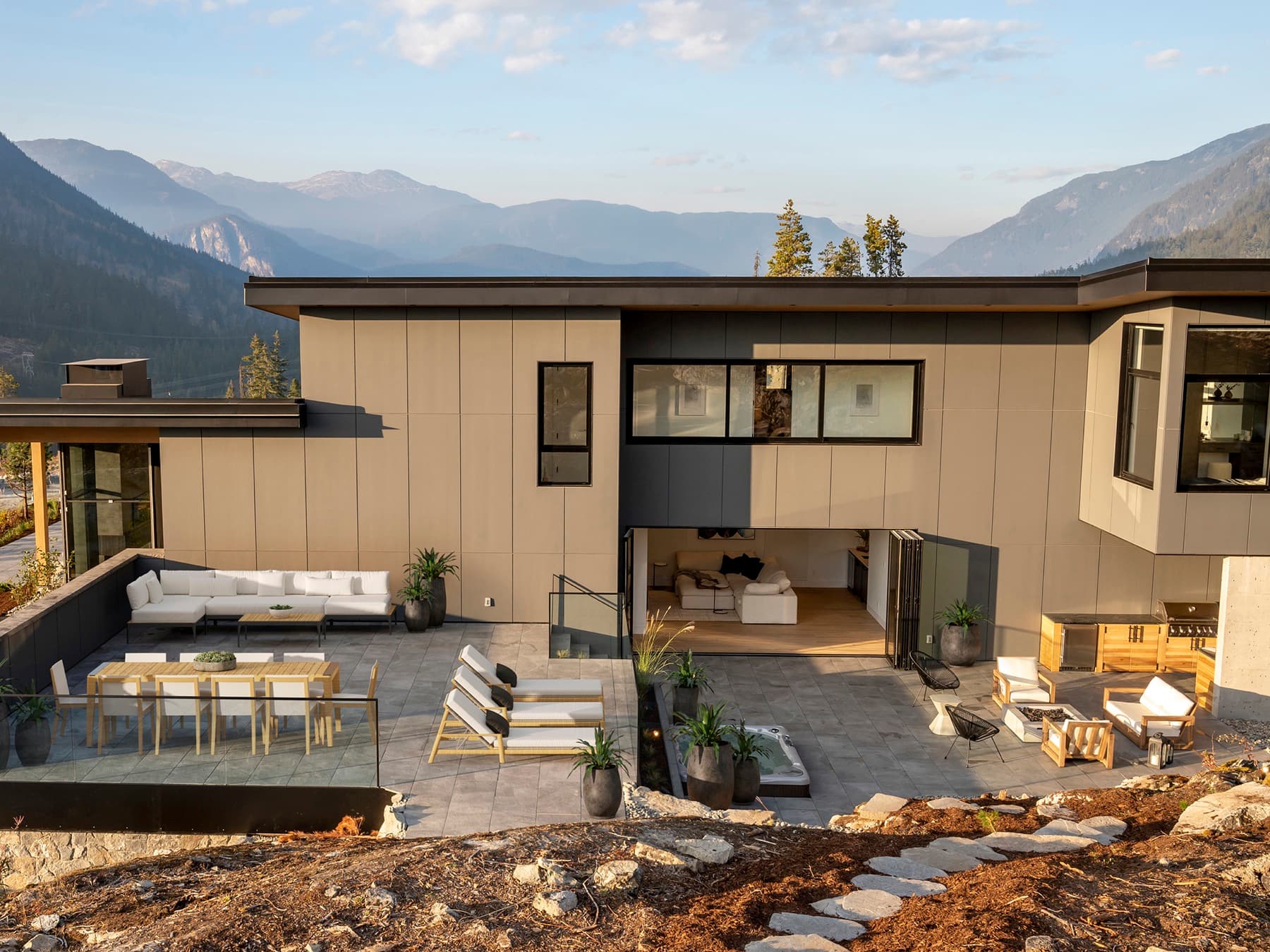
The Sea to Sky Corridor offers two very different communities within an hour of each other — Squamish and Whistler. Both have extraordinary outdoor access, both attract people who want to live differently than in a city, and both have their own distinct character.
But they're not interchangeable. If you're weighing Whistler vs Squamish real estate, you're making a real lifestyle decision, not just a transaction. This comparison is written for people actively considering both — and who want honest information, not a sales pitch.
The Quick Version — Key Differences at a Glance
| Factor | Whistler | Squamish |
|---|---|---|
| Entry point | Higher | More accessible |
| Short-term rental | Legal via Phase 1 covenants (exempt from BC's STR restrictions) | Restricted — principal-residence rules apply |
| Community character | International resort | Fast-growing outdoor town |
| Vancouver commute | ~2 hours | ~1 hour |
| Rental market | Strong short-term + tight long-term | Primarily long-term |
| Who it's for | Resort lifestyle, owner-investors, skiers | Families, commuters, value-seekers |
Real Estate Prices and Entry Points
Squamish is significantly more affordable than Whistler. The gap has narrowed over the past decade, but it remains real.
Whistler has a higher entry point. Condos in the Village, Benchlands, or Creekside start in the mid-to-high hundreds of thousands for older units and climb from there; a Phase 1 covenant adds a premium because the rental income potential is real and valued. Single-family homes are a multi-million-dollar market.
Squamish offers detached homes, townhomes, and condos at price points that would buy considerably less in Whistler — even after a decade of strong appreciation.
What drives the difference? Whistler has global brand recognition, a mature tourism economy, ski-in/ski-out inventory, and hard supply constraints. Squamish has more development capacity and is still building out — its value story is community growth, not resort scarcity.
The Rental Market — Where the Two Really Diverge
This is the most important section of this comparison for investors, and it comes down to regulation.
Whistler has a legal short-term rental market; Squamish effectively doesn't. BC's provincial short-term rental rules restrict STRs to a host's principal residence in most communities — including Squamish. Whistler's tourist accommodation areas are exempt from those provincial restrictions, because the resort was purpose-built for visitor lodging through its covenant system. A Phase 1 property in Whistler can be legally rented nightly, full stop. A Squamish investment property generally cannot.
If nightly rental income is part of your plan, this single regulatory fact decides the question. (The full mechanics are in my Phase 1 guide and the vacation vs. long-term rental comparison.)
Squamish's rental market is long-term. Renters work locally — construction, tourism, trades, young families — and demand is strong and stable. Monthly rents are lower than what a Whistler Phase 1 property grosses on nightly rental, but management overhead is minimal and the tenant profile is settled.
For investors: Whistler suits an active, combined personal-use-plus-income strategy. Squamish suits a buy-and-hold, long-term-tenant strategy betting on community growth.
Lifestyle and Who Each Community Suits
Whistler is an international resort. Life revolves around the mountain, the trails, and the tourism economy. Costs run higher, peak seasons are busy, and the energy swings between winter peak, summer peak, and quiet shoulders. It attracts outdoor-focused people comfortable with the resort rhythm — and there's a genuine year-round community underneath the visitor economy, with schools and families (see the school districts guide).
Squamish is younger and still becoming. It attracts people who want outdoor access without resort pricing — young families, remote workers, people happy to drive to a ski hill. Smaller, less polished, more DIY, with a real growth trajectory: new development, an evolving downtown, and momentum.
Commute: Squamish sits about an hour from downtown Vancouver by the Sea to Sky Highway; Whistler is roughly two. If you're in Vancouver weekly, that difference compounds fast. If you visit your property six times a year, it barely matters.
Investment Considerations by Community
Whistler investors should plan a long hold, understand the covenant system, and treat the property as a combined personal-use and income asset. Global brand, stable tourism economy, structural supply floor — but slower liquidity than city markets.
Squamish investors are betting on growth — more people, more development, more infrastructure — with a stable long-term tenant base. Different risk profile: emerging-community appreciation rather than resort scarcity.
Neither is a get-rich-quick market. The full framework is in investment property in Whistler.
My Take — Who Should Buy Where
A holiday home with rental income potential, and the budget for it: Whistler. The legal nightly-rental market simply doesn't exist in Squamish, and Whistler's brand supports long-term value.
More property for your money, no need for ski-out-the-door: Squamish deserves a serious look — lower entry, real growth, and a lifestyle that suits many families better.
Commuting to Vancouver regularly: Squamish wins on geography, clearly.
Pure investment, no personal use: Whistler is the stronger rental market but the pricier ticket; Squamish offers growth upside with a different risk profile. Run both sets of numbers honestly before deciding.
Frequently Asked Questions
Is Squamish cheaper than Whistler? Yes — meaningfully, across every property type, though the gap has narrowed over the past decade. The same budget buys more space in Squamish or better location and rental rights in Whistler.
Can I run an Airbnb in Squamish? Generally only in your principal residence, under BC's short-term rental rules. Whistler's tourist accommodation areas are exempt from those provincial restrictions, which is why investors wanting nightly rental income buy Phase 1 in Whistler.
Which is better for families? Both work. Squamish offers more house for the money and an easier Vancouver connection; Whistler offers the resort lifestyle with real schools and a year-round community. It comes down to budget and how central the mountain is to your life.
Still Deciding?
If you're genuinely torn between Squamish and Whistler, I'd love to help you think it through. I work across the Sea to Sky Corridor and know what these communities are actually like to live in — not just what the listings say.
Tell me what matters most — budget, lifestyle, rental income, commute, hold period — and I'll give you an honest read on your situation. The Whistler real estate hub is a good place to keep researching in the meantime.
Allira King Real Estate Agent | Angell Hasman & Associates Realty Ltd. 📞 604 902 6070 ✉️ allira@alliraking.ca 🌐 www.alliraking.ca
Allira King is a licensed real estate agent with Angell Hasman & Associates Realty Ltd., serving Whistler, Squamish, and the Sea to Sky Corridor. She also operates a vacation rental cleaning business in Whistler, giving her direct knowledge of how the corridor's short-term rental market actually works.
This article is for informational purposes only and does not constitute legal, financial, or real estate advice. Short-term rental regulations and market conditions change — verify current rules independently. Consult a licensed real estate professional for advice on your specific situation.